A team that usually works between calendar appointments, project pressure and home office needs more than a nice room with coffee for a successful team-building event. The right team-building venue in Austria creates distance from everyday work, gives conversations a new setting and supports exactly the format you are planning: improving collaboration, resolving conflicts, celebrating successes or integrating new colleagues.
The venue has a bigger influence on the day than many of the programme items. An escape room in a basement can work for a small, dynamic group. A strategy workshop followed by an outdoor activity, on the other hand, needs daylight, quiet spaces to retreat to and surroundings that allow people to move around. If you filter only by capacity and price, it's easy to overlook these differences.
What a good team-building venue needs to deliver
The first question isn't: which venue is the most spectacular? It's: what should change in the team after this day? If you want to strengthen understanding of roles and communication, flexible workshop rooms and small breakout areas are more valuable than a large event hall. If the focus is an end-of-year celebration, atmosphere, food and an easy-going schedule matter more.
So plan the format first, then the setting. For a half-day workshop, a well-connected venue in Vienna, Graz, Linz or Salzburg is often enough. For a two-day team event, a seminar hotel outside the city becomes more relevant. Staying overnight saves on transfers, extends informal conversations and leaves room for an evening programme. At the same time, the budget and organisational effort increase. This is particularly worthwhile if the group is travelling from several locations or the team-building event has a clear development goal.
Group size changes the requirements too. Ten people can work in a cosy lounge and stay focused. From 30 people upwards, you usually need at least one additional area for small groups besides the main room. With 80 participants, arrival, cloakrooms, acoustics, break areas and catering become genuine success factors. So don't just ask about the maximum number of people – ask about the right seating for your format.
Team-building venues in Austria: city, countryside or seminar hotel?
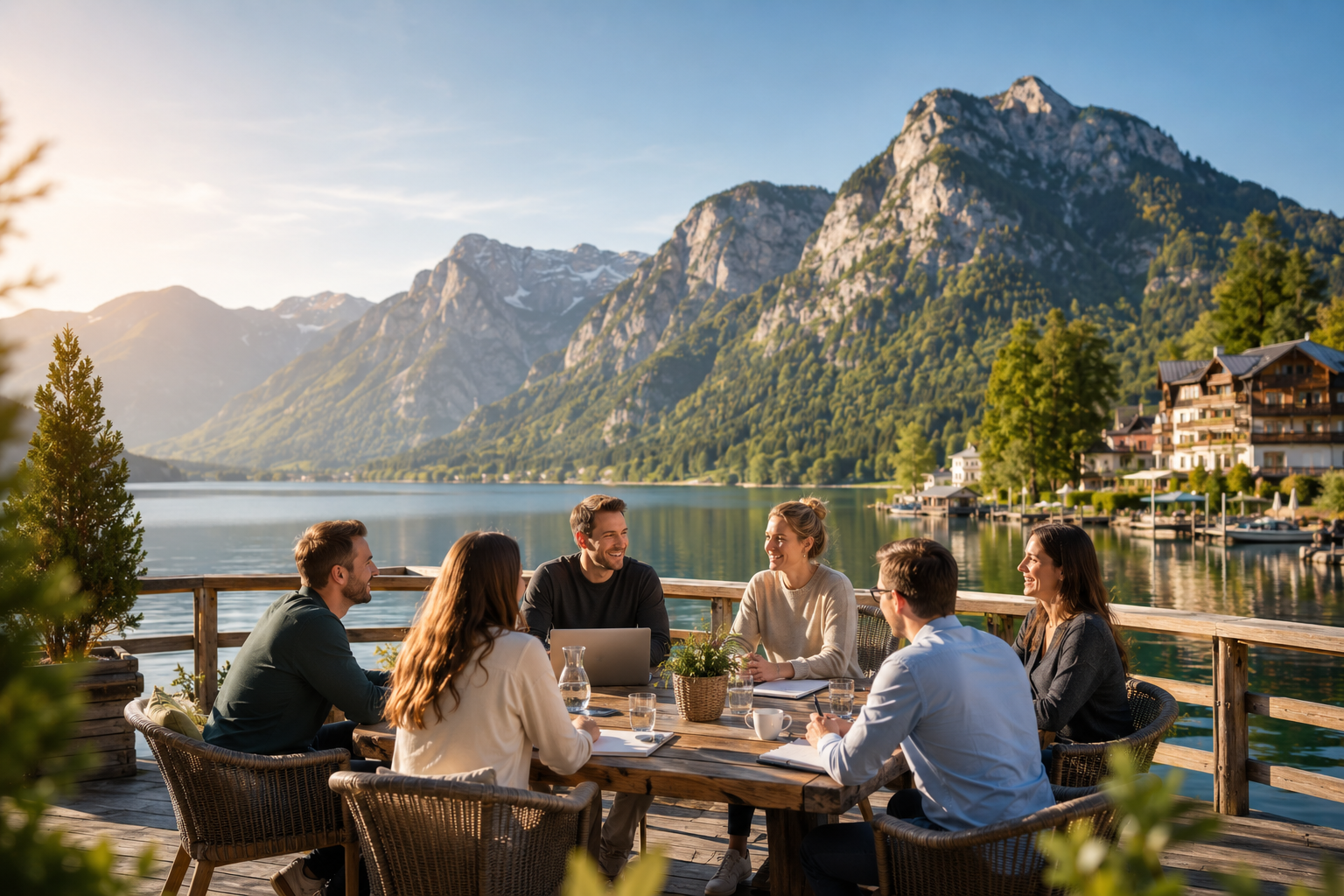
Austria offers short distances between urban business settings, mountain regions, lakes and rural retreats. The best choice depends on the time available, travel and the dynamic you want to create. A remote mountain hut fosters closeness, but for a group coming from Vienna, Vorarlberg and Styria it can mean more time travelling than time together.
| Setting | Particularly well suited to | What to look out for |
|---|---|---|
| Vienna and outskirts | Half-day formats, creative workshops, international teams | Public transport links, parking, quiet breakout rooms |
| Salzburg and surroundings | Incentives, strategy meetings, teams travelling long distances | Seasonal prices, availability during congresses and the festival season |
| Graz and southern Styria | Food-and-wine team days, smaller offsites | Transfers between venue, activity and accommodation |
| Linz and Upper Austria | Centrally organised workshops, industrial and project teams | Room flexibility and suitable evening options |
| Mountain and lake regions | Multi-day retreats, outdoor formats, team fresh starts | Bad-weather alternative, mobile reception, luggage and weatherproof clothing |
A city venue has one clear advantage: it reduces friction. Participants arrive by train or public transport, external trainers can find the place without a long transfer, and a group dinner is easy to add. For a focused team day, that can be a better decision than an ambitious excursion programme.
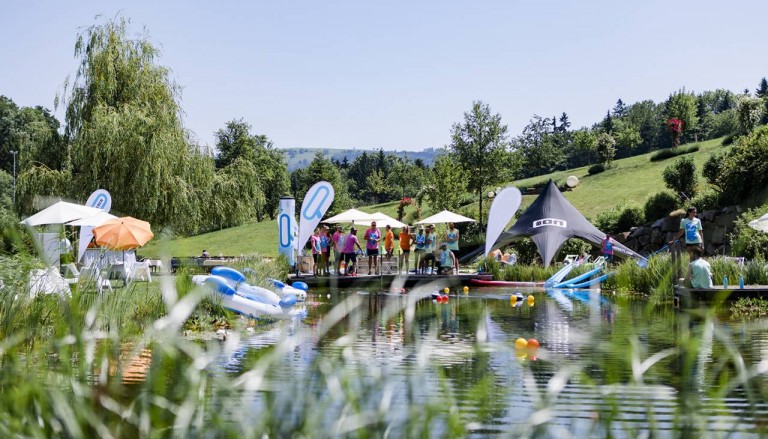
Countryside venues, by contrast, work particularly well when the change of scenery is part of the concept. A team that is reorganising or needs to reconnect after an intensive project phase benefits from more time and fewer distractions. The key is the plan B. A canoe trip or an orienteering run should not be the only pillar of the day. Check whether a sufficiently large indoor area and a meaningful alternative programme are available if it rains.
Rooms and facilities: what the quote should include
Team-building rarely fails because of a lack of designer furniture. It falters when groups can't find space to work, presentations run on shaky technology or conversations are drowned out by noise from the room next door. Visit the venue if budget and lead time allow. When enquiring online, specific questions help.
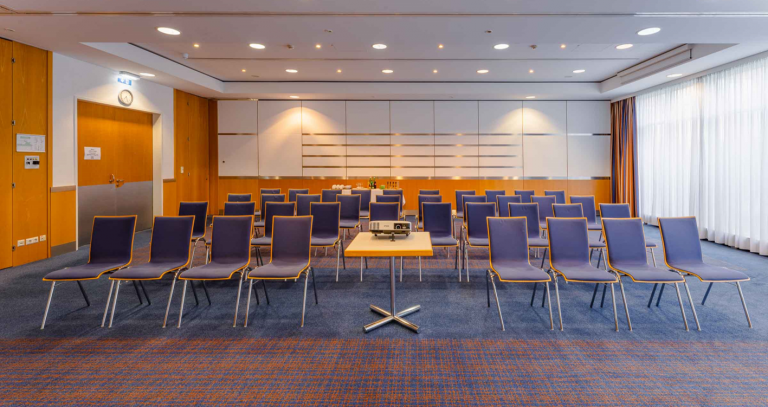
First, check whether tables and chairs can be rearranged quickly. Methods such as World Café, Design Thinking or retrospectives need different room layouts from talks. Pinboards, facilitation kits, flipcharts, Wi-Fi and a reliable presentation system should not only be available but also sufficient for the size of your group. For hybrid elements, good microphones, camera positions and a stable internet connection matter as well.
Breakout rooms are often the underestimated factor. When six groups are working at the same time, one large hall with six poseur tables is usually not enough. Confidential conversations, conflict mediation or feedback rounds need acoustically separate areas. Also ask about exclusive use of the space. A wedding taking place in parallel or a noisy trade-fair set-up can significantly reduce the impact of a workshop.
Catering is not a side issue. Long breaks break up the flow, and menus that are too heavy sap energy in the afternoon. Clearly timed coffee breaks, water in the room and a lunch that suits your programme all make sense. Outdoor activities call for different solutions than a workshop in a seminar hotel. Ask about intolerances and vegetarian or vegan options early and pass them on in one go.
How to compare quotes without surprises
A low day rate is only good value if the essential services are included. So compare quotes on the same basis: room hours, AV equipment, catering, cleaning, staffing, accommodation and any additional costs. Evening programmes often add room hire, minimum spend, closing times or fees for extended use.
Ask venue providers for a clear breakdown for your actual number of participants. An enquiry for "around 25 people" makes sense for initial orientation. Once the date and schedule are fixed, the seating, start and end times, rooms required and mealtimes should be described in binding terms. This prevents a seemingly suitable room turning out to be available only in cinema-style seating, or the workshop having to be interrupted for a changeover.
Also pay attention to cancellation terms and participant thresholds. With team-building events, group sizes often change at short notice due to sick leave, project peaks or travel commitments. Flexible terms come at a price but can be more economical when numbers are uncertain than a lower base price with high cancellation fees.
If you are enquiring with several venues, word your brief identically. State the date or time window, number of people, occasion, types of rooms needed, accommodation requirements, budget range and any special requirements. That way, the replies are genuinely comparable. On JustRoom you can send commission-free enquiries directly to suitable venues and compare quotes without an intermediary.
The schedule starts before the first programme item
Even the strongest team-building idea loses its impact if the group arrives in a rush or doesn't know what to expect. Communicate travel details, dress code, start time and the goal of the day early and clearly. For an outdoor element, include a recommendation for weatherproof clothing. For a workshop involving personal exchange, a brief note that active participation is welcome helps.
Allow a buffer of ten to 15 minutes between arrival and the first content. It seems small, but it changes the mood in the room. People need time for the cloakroom, a coffee and their first conversation. After intensive exercises, too, there should be a place where the team can carry on talking informally – a terrace, a bar, a garden or a shared table.
So don't choose the venue as a backdrop, but as part of your concept. When the space, the surroundings and the schedule all send the same message, a mandatory date becomes a day the team still remembers months later.