Twenty minutes before doors open, the new product is still hidden behind a black curtain. The cameras are in position, the first guests are posting about their arrival, and the lighting in the room is too bright. Details like these decide whether a launch feels like an obligation or creates a genuine moment. The best venues for product launches don't simply offer enough square metres. They support the message, the running order and the images that keep working long after the event.
For choosing a venue, this means the biggest room doesn't win – the room with the right dramaturgy does. An e-bike needs different conditions from new software, a design collection or a B2B product that requires explanation. If you only search by capacity and day rate, you often overlook the factors that become expensive on launch day: poor sightlines, ceilings that are too low, no loading areas or a stage that doesn't work on video.
Best venues for product launches: clarify the format first
Before you compare venues, you should be clear about what the launch is meant to achieve. Is it mainly about media reach, direct contact with customers, or sales partners who should test the product? Often an event is expected to do all of these at once. Then you need a room concept that separates presentation, experience and conversation without splitting up the group.
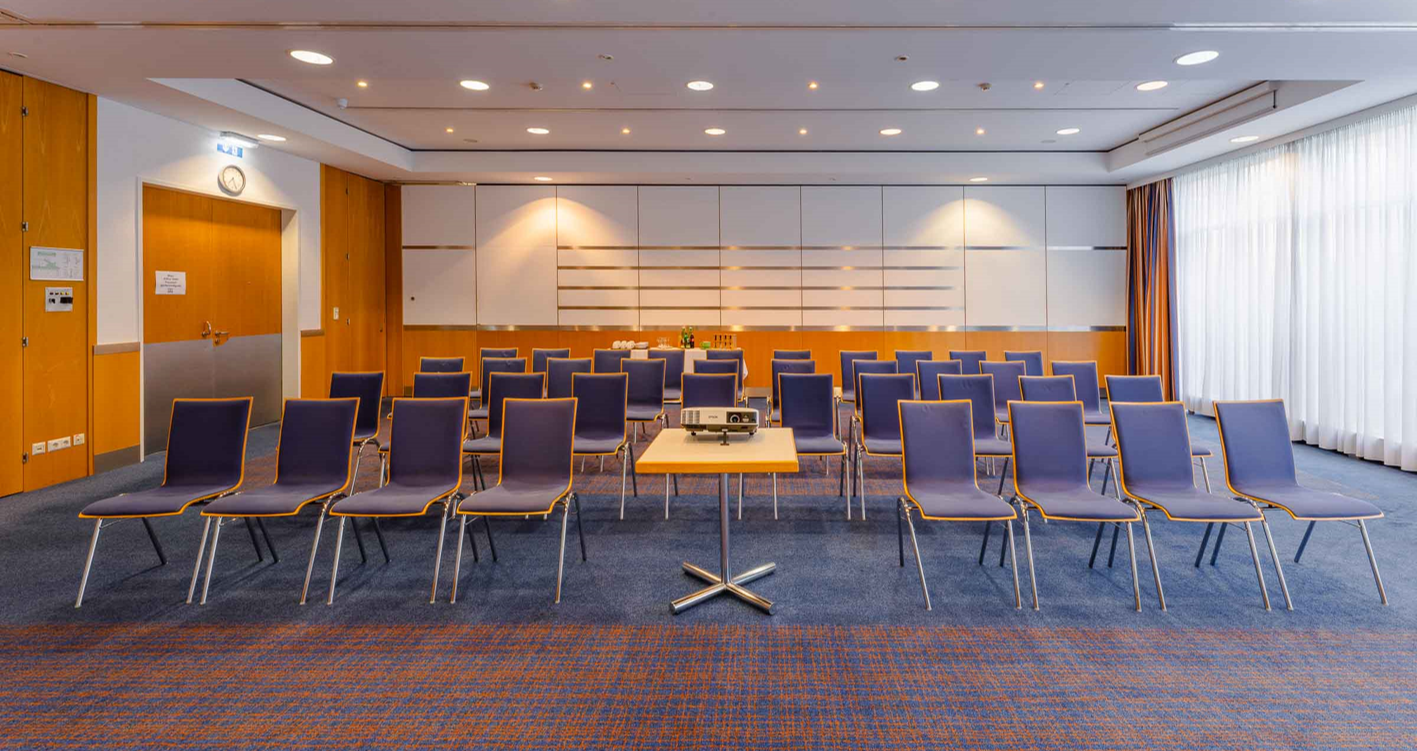
A classic press launch often works well in a clearly structured event space or conference area with a professional stage. Guests need a good view of the product and the speakers, interviews need quiet zones, and for photo and video the background must not look arbitrary. A striking room is welcome, as long as architecture, branding and lighting don't work against each other.
For an interactive launch, space to move around is more important. If guests are testing devices, going round stations or booking demos, theatre seating and a large stage are not enough. In that case, plan several areas: reception, main presentation, demo zones, catering and quiet spots for conversations. As a rough guide: for 80 guests with active product stations, a 180-square-metre room can make more sense than a 100-square-metre hall that, on paper, also holds 80 people.
| Launch format | Type of venue | What matters most |
|---|---|---|
| Press and media launch | Event space, hotel conference room | Stage, acoustics, interview area, robust Wi-Fi |
| Product demo with testing | Loft, showroom, industrial hall | Open space, power, floor load capacity, storage and deliveries |
| B2B launch for customers | Seminar hotel or conference hotel | Easy access, breakout rooms, catering, accommodation |
| Community launch | Creative space, club, rooftop | Atmosphere, admission logistics, sound, weatherproof alternative |
The table is not a rigid assignment. A seminar hotel can be an excellent fit for a high-end tech launch if it offers a modern plenary room, a spacious lobby and several breakout rooms. Conversely, a trendy industrial space quickly fails if echo and a limited power supply mean the presentation is only possible at considerable extra effort.
The feel of the room is part of the product message
A room sends a signal before the first word is spoken. High ceilings, exposed concrete and open spaces feel different from an elegant hall, a design hotel or a minimalist showroom. This doesn't have to mirror the product category exactly. A sustainable product can come across as more credible in an urban, repurposed industrial hall than in a sterile convention space. What matters is whether the setting reinforces the story.
Start by checking the sightlines. Can everyone see the reveal? Are there pillars, galleries or fixed elements that block the view of the stage and screens? For a product showcase, the room is often darker than for a conference. That improves projections and the lighting mood, but makes orientation, catering and networking harder. A good floor plan resolves this conflict with clear walkways and separately controllable lighting zones.
Ceiling height is also more practical than it first sounds. It determines whether large LED walls, trusses, light installations or a vehicle on a platform are feasible at all. With small products, on the other hand, a compact room can create closeness. For a cosmetics or design launch with 40 selected guests, a large hall is often counterproductive: the staging loses tension, conversations fragment and photos look empty.
Don't forget the arrival. The first impression usually isn't formed in the main room but at the cloakroom, at check-in or in the lift. An unclear approach, a cramped entrance or long waiting times dampen the mood before the launch has even begun. Especially in central Vienna or densely built-up German cities, you should clarify parking, taxi access, loading zones and step-free access early on.
Check technology, logistics and permissions before the date
Many venues describe themselves as technically equipped. That is a start, but not a reliable basis for planning. Ask specifically about the number and size of screens, native resolution, brightness, the existing sound system, microphones, lighting control and the technical staff on hand. A projector for a workshop is not automatically suitable for presenting a product reveal convincingly in front of an audience and cameras.
Wi-Fi deserves special attention. At product launches, guests use several devices at once, stream content, download assets and post live. Ask for details of the dedicated line, the number of simultaneous connections possible and a separate network for production, the till or registration. If a live demo depends on the internet, always plan a recorded version or a local backup. That isn't excessive caution – it's professional risk management.
The following points belong in every technical briefing, because they can rarely be improvised later:
- Deliveries, loading zone and door widths for products, cases and decorations
- Electrical circuits, available power and cable routes without trip hazards
- Set-up and dismantling times, including any night surcharges
- Noise restrictions, closing times and permits for music or outdoor areas
- Storage space for packaging, giveaways and empty transport cases
With vehicles, machinery, batteries or food in particular, further questions arise. Is the product allowed in the room at all? Are there requirements regarding fire safety, weight, odour, refrigeration or insurance? A beautiful venue is not a good choice if the main attraction only fits through a back entrance or may not be presented for safety reasons.
How to compare suitable venues without surprises
Don't just send an enquiry with a date and the number of guests. Describe the launch format in a few clear sentences: target audience, running order, planned technology, product size, preferred seating and the time window for set-up. That way you receive offers that are comparable and avoid later additional charges for equipment, furniture or staff.
When comparing prices, it helps to look at four blocks separately: room hire, technology, catering and additional costs. Room hire that looks low can rise considerably due to mandatory technical partners, minimum spends or long set-up times. Conversely, a higher offer from a seminar hotel is often good value if furniture, standard equipment, coffee breaks and on-site support are already included. For a one-day B2B launch with guests from out of town, accommodation at the same location can also reduce costs and coordination effort.
If possible, visit your shortlisted venues at a similar time of day to the planned event. Daylight, traffic noise and the situation at the entrance change considerably over the course of a day. Don't just let them show you the room empty. Ask for a possible stage plan, check the routes to the toilets and the catering, and stand where the back row will later be sitting. If you can't clearly see the product or the presentation from there, even beautiful renderings won't solve the problem.
For your search, it can make sense to filter by occasion, city, capacity and facilities and then contact the venue providers directly. On JustRoom you can compare suitable event venues and seminar hotels commission-free and send a no-obligation enquiry. This saves time above all when you need not just a room, but reliable information on space, seating, technology and availability.
The best venue for your product launch doesn't make the product seem smaller – it makes it easier to understand and more desirable. If guests leave still talking about the demo, the presentation or trying the product for the first time, the venue has done its job.