A commission-free direct enquiry to an event venue may at first sound like a minor difference in the booking process. For your budget, your planning time and the quality of coordination, however, it can be decisive. You speak directly with the people responsible on site for rooms, catering, technology and logistics – with no agency fee and no information lost along the way.
For seminars, workshops, conferences or company parties in particular, it isn't enough to find a room for the right number of people. You need a firm answer on availability, minimum spend, technology, seating and any additional costs. A good direct enquiry brings exactly these points to the table early on.
What commission-free means in practice
Commission-free means that no agency commission is charged for your enquiry. The venue receives your contact details directly and prepares its quote itself. This creates a clear line of communication and makes comparison easier, because you clarify questions directly with the venue provider.
That doesn't automatically mean every venue is cheaper than via other booking channels. Prices still depend on the date, occupancy, scope of services and the occasion. A Friday in December for a Christmas party comes with different terms from a workshop on a Tuesday in February. The advantage is that you aren't funding an additional intermediary and can negotiate details directly.
This is particularly relevant for events with several components. If, for example, you need a seminar room for 25 people, two coffee breaks, lunch, an evening reception and ten overnight stays, a flat day rate is rarely enough. The venue can tell you which items are calculated at a fixed price, where minimum numbers apply and which services remain optional.
| Booking via an intermediary | Commission-free direct enquiry |
|---|---|
| Communication may pass through several parties | You clarify details directly with the venue |
| Terms are not always fully visible | You ask specifically about additional costs and services |
| Changes often require an extra round of coordination | Changes can be discussed more quickly |
| Agency models may include mark-ups | No agency commission for your enquiry |
When a direct enquiry is particularly worthwhile
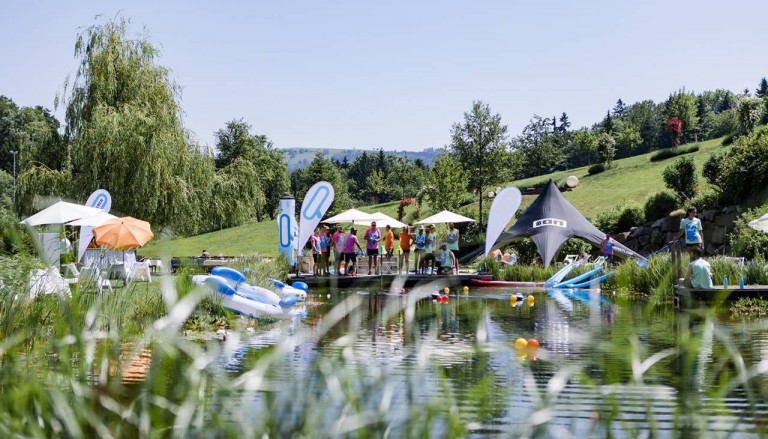
The more individual your event, the more sense direct communication makes. That applies to multi-day seminars as much as to product presentations, hybrid conferences or team-building events with an outdoor programme. As soon as room, schedule and catering don't come off a standard list, questions arise. Direct contact then saves time and prevents misunderstandings.
This route is also helpful when time is short. If a date needs to be confirmed at short notice, you can state clearly in your enquiry by when you need a response. A concrete sentence such as "We will decide by Wednesday, 12 noon" helps the venue prioritise your enquiry correctly. Set a realistic deadline, especially with large properties or complex group enquiries.
For recurring formats, a direct enquiry can also lay better foundations. If you are planning four workshops a year in Vienna, Graz or Salzburg, for example, it is worth building a longer-term relationship with suitable properties. Venue providers then know your requirements, such as room sizes, break times or technical standards. This doesn't replace careful review of quotes, but it noticeably shortens the organisation of follow-up dates.
For small, simple meetings, on the other hand, the difference is sometimes smaller. For a two-hour meeting with six people and no catering or special requests, quick availability is what matters most. Even so, the direct route remains practical if you need a contact person for short-notice changes.
How to write an enquiry that makes quotes comparable
Many unclear quotes aren't the result of a venue communicating poorly. Details are simply missing from the first enquiry. The more precisely you describe your needs, the more reliable the answer will be. You don't need to know every detail, but you should mention the decisions that affect price and feasibility.
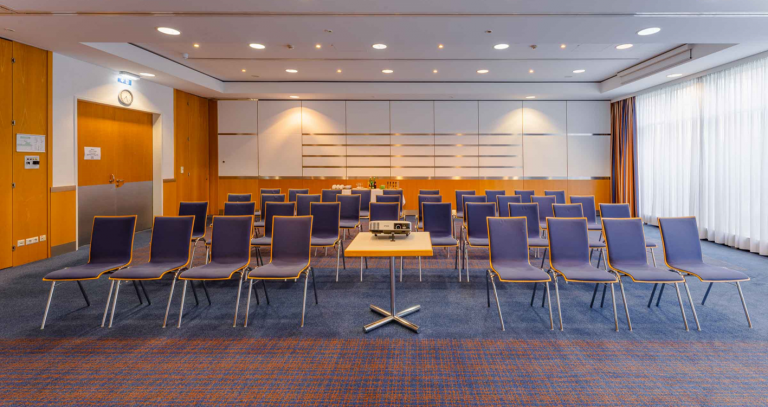
These include the date and preferred time, number of people, event format, desired room layout and catering and technology requirements. For a workshop with 18 people, for instance, it is crucial whether you are planning a U-shape, a circle of chairs or movable work islands. For a conference with 80 people, it makes a difference whether a plenary room with theatre seating is enough or whether several breakout rooms are needed in parallel.
Describe the schedule too. Does the event start at 9 am and finish at 5 pm? Are set-up times, registration or a reception the evening before required? Should the group have dinner together after the seminar? Information like this prevents a seemingly suitable venue from being ruled out later because of missing access times or room changes.
Also ask for a transparent breakdown. A good quote shows what room hire, technology, catering and any service charges each cost. Ask about minimum spend, cancellation terms, parking and accessibility if these points are relevant to your group. With hotels, room allocation, release date and single room supplement are added to the list. In Austria you will often search for a seminar hotel for this, in Germany for a conference hotel – the questions for the venue provider remain the same.
A short enquiry might look like this: "On 18 September we are planning a workshop for 22 people from 9 am to 5 pm. We require a bright room in a U-shape, a screen or projector, facilitation materials, two coffee breaks and lunch. Please send us a quote with all individual items, minimum spend and cancellation terms." This allows the venue to respond quickly and specifically.
Comparing quotes properly rather than just counting prices
The lowest total isn't automatically the most economical quote. A room offer without technology, staff or cleaning can end up costing more than a higher package price with clearly defined services. So always compare on the same basis of services.
Apply the same criteria to every venue: total price including all fixed fees, available room time, technical equipment, catering, location and terms if the number of participants changes. For a seminar, a property near the railway station can make more sense despite a higher day rate if it means less transfer time and lower taxi costs for the group. For an evening event, on the other hand, exclusive use may matter more than the cheapest room hire.
Look out for wording such as "from", "charged on consumption" or "on request". These aren't a problem in themselves, but they should be clarified. For drinks, ask how they are billed; for technology, about on-site support; and for catering, about vegetarian, vegan or low-allergen options. If you are working to a fixed budget, say so openly. Many venues can then suggest a suitable alternative, such as a different menu, shorter room hire or a more economical seating layout.
Another point is how binding the offer is. Check how long a quote is valid and whether the date remains reserved during that time. A non-binding enquiry is the right start. Once you decide, price, services, number of participants, payment schedule and cancellation terms should be confirmed in writing.
Direct coordination makes events easier to plan
The best venue isn't just beautiful or affordable. It suits your schedule and responds reliably to the questions that come up shortly before the date. Direct communication helps you recognise exactly that early on. If a venue provider responds precisely to your details, suggests alternatives when space is tight and points out possible additional costs, that is a good sign for the collaboration.
Use direct contact after the quotation phase too. A week before the date, confirm the final number of guests, deliveries, the on-site contact person and the technical running order. For larger events, a short schedule with times is worthwhile. That way the venue knows when catering must be ready, when breakout rooms will be opened and who is authorised to make decisions.
If you want to research suitable spaces in a structured way first and then enquire without paying any agency commission, JustRoom supports this approach with clear venue information and direct contact with the venue provider. That leaves more time for what your event should really achieve for its participants.