Monday morning, 9:12 am, the enquiry is on the desk: a workshop for 25 people, two breakout sessions, easy to reach, catering on site – and please, no sterile meeting room. This is exactly where the question becomes crucial: which event venue suits which occasion? Booking purely on availability rarely saves time. Because the wrong venue costs more later – in atmosphere, in how smoothly things run and, if push comes to shove, in budget.
The right venue is never just a backdrop. It determines how focused the work is, how well guests settle in, how long they stay and how professionally your event is perceived. That is why it pays not to start by looking for pretty pictures, but by considering the format, the goal and the requirements of your event.
Which event venue suits which occasion in a business context?
In business, one simple rule applies: the clearer the purpose of the event, the more precisely the venue has to match it. A strategy workshop needs something different from a Christmas party. A client event works differently from an internal offsite. And a one-day seminar for 60 people has different requirements from a confidential management meeting.
The most common mistake is choosing a venue because you like it rather than for its function. It sounds obvious, but it happens a lot. A stylish industrial space can be ideal for a brand event but impractical for a training session with a tight schedule. Conversely, a classic seminar room can be perfect for productive work and completely unsuitable for an emotional team event.
Four questions are therefore decisive: what should have been achieved by the end of the event? How many people will actually come? Which infrastructure is indispensable? And what feeling should the event convey?
Seminars and conferences need structure, not show
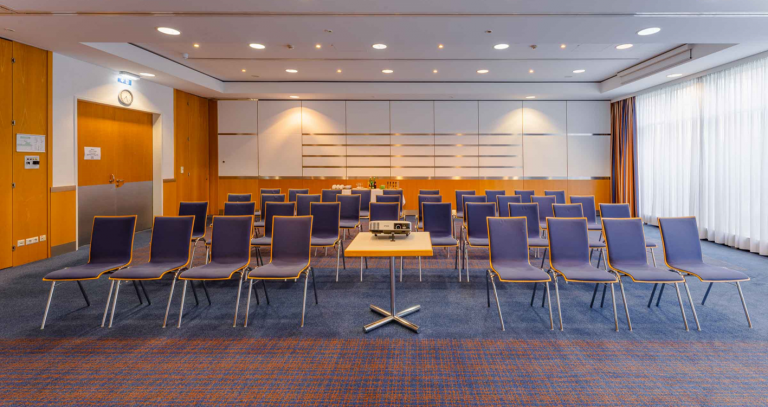
For seminars, training sessions and classic conferences, functionality and reliability come first. Daylight, good acoustics, ergonomic seating, working technology and easy access matter more here than a spectacular view. If your programme is packed, break logistics, cloakroom, signage and catering quickly become relevant quality factors.
Seminar hotels and professional conference venues are usually the best choice for this kind of occasion. They are designed for recurring formats, can score with well-established processes and often offer flexible room sizes. That saves coordination and reduces the risk of surprises on the day.
If you are planning multi-day formats, combining meeting room and accommodation is almost always more efficient than a separate solution. Especially with teams from several locations, you avoid transfer times and organisational friction.
When a classic conference room is the better choice
Not every business event has to be inspiring in a design sense. When knowledge transfer, concentration and clear processes are the priority, a well-equipped conference room is often the most sensible solution. This applies in particular to certification seminars, larger training groups or events with a tightly timed agenda.
The drawback of such venues rarely lies in their function, but rather in their atmosphere. When motivation, creative energy or brand impact matter, a neutral room may not deliver enough.
Workshops and creative formats thrive on atmosphere and flexibility
Workshops, design sprints, innovation sessions or team retrospectives need movement. A room with rows of tables is rarely enough here. You need flexible set-ups, free wall space, breakout options and ideally an environment that breaks habitual ways of thinking.
Lofts, studios, smaller offsite venues or modern workshop venues are often better suited to this than classic conference rooms. They feel more informal, allow more interaction and support methods in which groups switch between plenary sessions, small teams and quiet work.
Still, the same applies here: atmosphere is no substitute for infrastructure. If the Wi-Fi is unstable, there are too few power sockets or the acoustics are poor, the advantage quickly disappears. With hybrid formats in particular, you need to look especially closely at technology and room layout.
Which event venue suits which occasion for small teams?
For small groups of under 20 people, the venue can be more personal. A stylish meeting room, a quiet boutique hotel or a creative space with a lounge area can provide just the right setting. Rooms that are too large quickly feel empty here and slow down the dynamic.
For leadership meetings, confidential meetings or coaching sessions, discretion is often more important than staging. Secluded rooms, high-quality service and a calm environment are then usually the better choice than busy event spaces.
Team building and offsites only work in the right setting
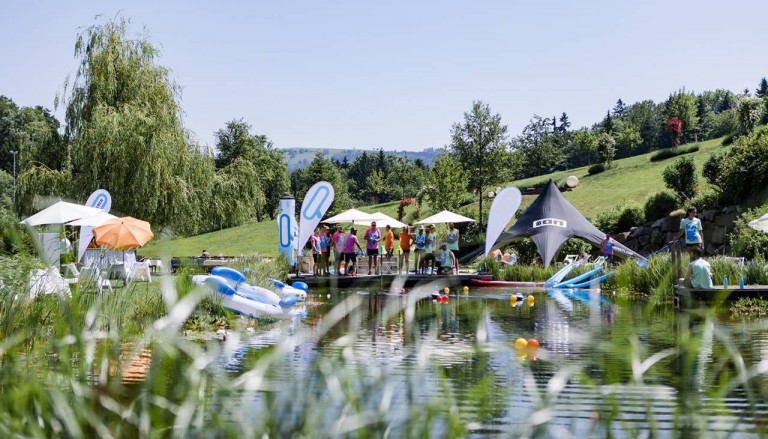
As soon as the focus is on exchange, motivation and shared experiences, a functional meeting room is no longer enough. Offsites and team-building events need places that create distance from everyday life. That might be a seminar hotel in the countryside, a mountain hut with professional infrastructure or a venue with outdoor areas and a supporting programme.
Here, the place is meant to trigger something deliberately: focus, openness, cohesion or new perspectives. Especially for teams that otherwise work remotely or across sites, the setting has a noticeable influence on the quality of the encounter.
It is important, however, not to play the experience factor off against practical feasibility. A remote venue can be fantastic if the team stays overnight. For a half-day format with guests travelling in from several cities, the same location quickly becomes a disadvantage.
Company parties need atmosphere, but also logistics
Summer party, Christmas party, anniversary or kick-off – company parties are often booked on gut feeling. That is understandable, but risky. Because a good atmosphere is not created by beautiful surroundings alone, but by a smooth process.
Restaurants with an exclusive area, event venues with catering expertise, rooftops, bars or urban event spaces are suitable options, depending on the occasion. What matters is how formal or relaxed the event should be. An elegant gala has different requirements from a relaxed get-together with a flying buffet and a DJ.
Pay particular attention here to things that are often underestimated in advance: noise restrictions, closing times, bad-weather alternatives, technology for speeches and whether the venue just looks good or can actually cater efficiently for 150 people.
If employees are travelling in from different regions, accessibility and parking become even more important. The most beautiful party venue is of little use if half the evening is lost to transfers.
Client events and product launches must suit the brand
At external events, the venue has a direct effect on your positioning. A launch, a networking evening or a press event therefore needs not only space and technology, but also a clear message in the room. The venue becomes part of the staging.
For premium brands, design venues, modern galleries, urban lofts or architecturally striking spaces often make a stronger impression than classic congress spaces. For products that need explaining, on the other hand, a functional venue with demo zones, a stage and catering may be more logical.
The trade-off is particularly clear here: the more character a venue has, the more profile your event gains – but often with greater demands on set-up, timing and budget. Not every extraordinary space is suitable for complex processes.
Weddings, private celebrations and emotional occasions follow their own rules
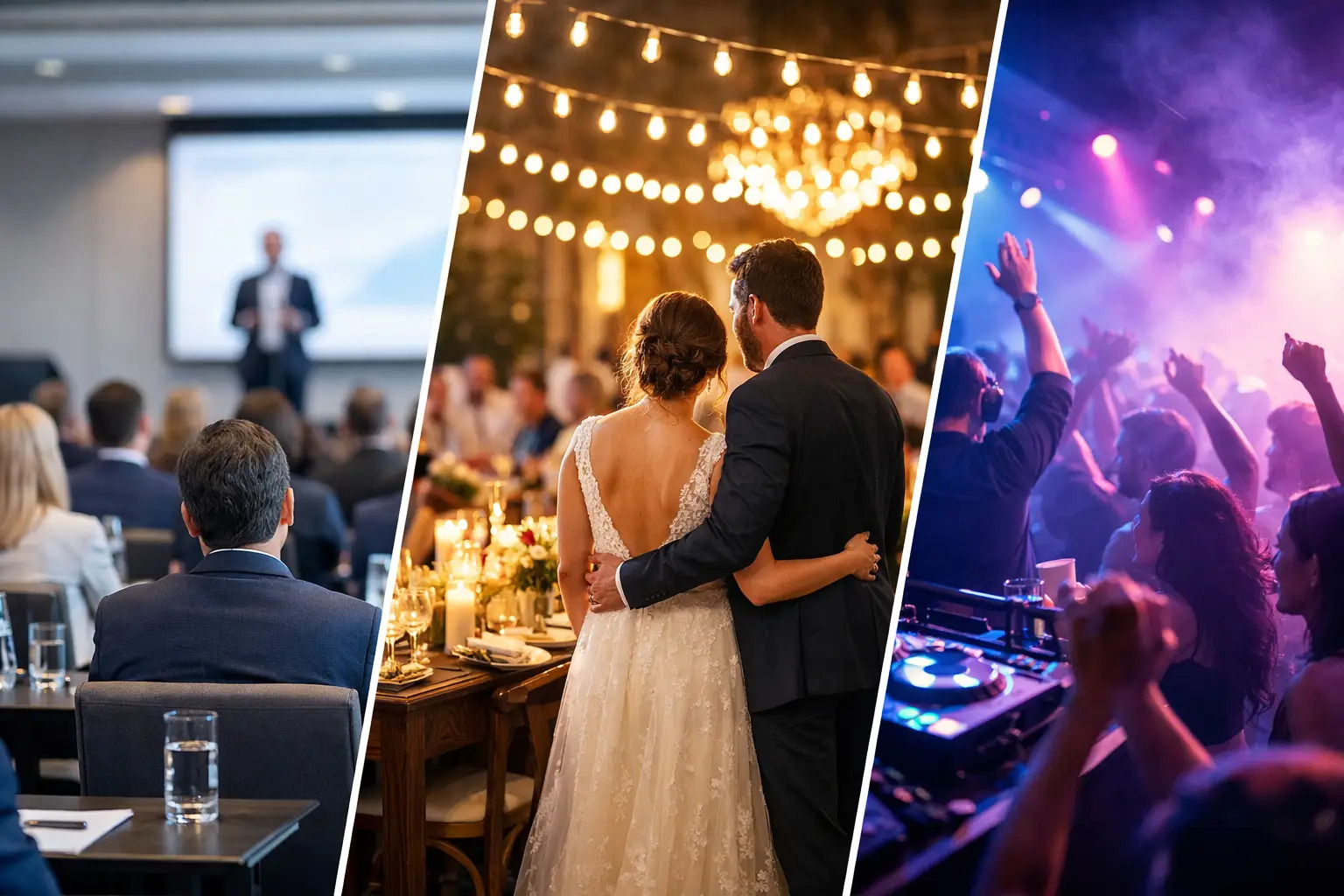
Even though business enquiries are often the focus on platforms, the same basic principle applies to private celebrations. At weddings, birthdays or christenings, the focus is not on the agenda but on the experience. Atmosphere, photo backdrops, food and personal style are central here.
Castles, country estates, wineries, restaurants with gardens or charming celebration venues are often the first choice for such occasions. Even so, practical considerations also play a part. Is there enough space for dinner, dancing and quiet corners? Is a civil-style outdoor ceremony possible? What is the bad-weather alternative? And how late can the party go on?
For private occasions in particular, it pays to take a sober look at side rooms, parking, accessibility and child-friendliness. The emotional decision for a venue is important – it just should not be a blind one.
How to make the right choice faster
If you need to decide quickly, a simple order of priorities helps. Do not start with what is beautiful, but with what is essential. Number of guests, occasion, location, budget, room set-up and technical requirements form the basis. Only then come style, special features and extras.
It also helps to separate must-haves from nice-to-haves. Do you need accommodation, a stage, an outdoor area or exclusive use? Or would that just be a bonus? This distinction saves an enormous amount of coordination.
When searching for the right event venue, transparency pays off. If you can compare room data, capacities, price indications and features directly, you will arrive at solid options more quickly. In practice, that is often worth more than ten beautiful pictures without context. And enquiring directly and commission-free also cuts out detours and gets you clarity faster.
Which event venue suits which occasion? It all comes down to the details
The best decision rarely comes from one big idea, but from getting the details right. A seminar fails because of the acoustics. An offsite loses energy because the journey is too long. A company party feels generic because the space and the occasion do not fit together. And a workshop falls short of its potential if the room does not allow interaction.
That is why a final reality check before you send your enquiry is worthwhile: does the venue suit not only the occasion on paper, but also the schedule, the guests and your goal? If you answer this question properly, the choice becomes much easier – and the event usually better too.
The right venue does not just feel right. It works for your format.