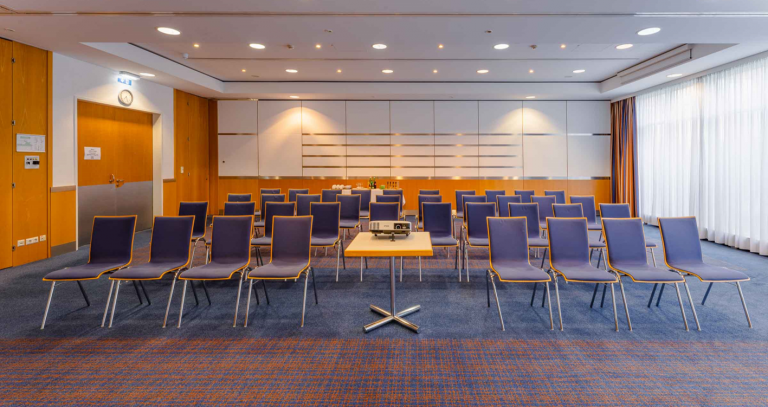
The workshop is in the calendar and the participants have been invited – but you still have no room. Finding an event venue for a workshop is about more than square metres and coffee breaks. The venue plays a part in whether conversations get going, groups can focus and concrete results are on the table at the end. A room with too little daylight, poor acoustics or a rigid set-up can quickly cost more energy than it seems to save at first glance.
You don't need endless research to get off to a good start. What matters is defining the format, the group and the goal clearly first. Then you can compare venues in a targeted way instead of being swayed by attractive photos or a long list of facilities.
Workshop format first, venue second
A strategy workshop with eight managers has different requirements from a creative session for 30 people or a training course with changing small groups. Before you send an enquiry, be clear about this: what should participants know, decide or do differently after the session? The answer sets the direction for room size, furniture and surroundings.
For an intensive full-day workshop, concentration usually matters more than a central city address. A seminar hotel on the edge of town or in the countryside can be the better choice, because travel creates fewer distractions and breaks are genuine breaks. For a compact half-day session with guests from several offices, on the other hand, good public transport links often count for more.
The agenda also shapes the room. If you mostly work in plenary, a U-shape or a circle of chairs works well. If teams are to work on topics in parallel, you need at least one large main room and separate breakout rooms. For design sprints, retrospectives or innovation formats, free wall space, mobile furniture and room for facilitation materials are not extras – they are working tools.
| Workshop format | Suitable room set-up | What to pay particular attention to |
|---|---|---|
| Strategy workshop with 6 to 12 people | Quiet room, boardroom table or U-shape | Daylight, discretion, long usage hours |
| Creative workshop with 15 to 25 people | Flexible seating, open floor space | Pinboards, whiteboards, movable tables |
| Training with group work | Main room plus 2 to 4 side rooms | Short distances, clear signage, acoustics |
| Hybrid workshop | Room with reliable AV equipment | Camera, microphones, screen and on-site support |
The criteria that matter on the day
Many venues list Wi-Fi, a projector and a flipchart as standard. That's helpful, but it isn't yet a mark of quality. Ask more specific questions: does the Wi-Fi stay stable with 30 devices logged in at the same time? Are there enough power sockets right at the workstations? Can you access the room before the start to set up materials? Details like these prevent a hectic first 20 minutes.
Daylight and ventilation have a direct effect on attention. For a session lasting several hours, the room should have windows that open or demonstrably good air conditioning. In summer especially, a stylish top-floor room without cooling quickly becomes a concentration problem. Ask for up-to-date photos of the room during the site visit or in your enquiry, and ask which way the room faces if your date falls in a hot time of year.
Acoustics are often underestimated. Hard floors, high ceilings and glass walls look modern but can make discussions tiring. This applies particularly to groups who present a lot or work in changing teams. A quick test on site helps: stand in different spots around the room and check whether you can clearly understand normal speaking volume.
Plan the breaks in as well. If the catering area is right next to the workshop room, things can quickly get noisy. If it is too far away, valuable minutes are lost. The ideal is a separate but nearby break area with coffee, water and light snacks. For full-day workshops, a light lunch is worthwhile. A lavish menu may look appealing, but for many groups it saps energy in the afternoon.
Finding an event venue for a workshop: weighing up location and budget
The best location depends on who is coming and how long you will be working. In Vienna, Salzburg, Graz or Linz, a central event venue can make attendance easier when employees, clients or external trainers are travelling in from different directions. Still check the parking options, as not every group uses public transport. The same applies to events in Germany – proximity to a railway station, airport or motorway is only an advantage if it matches how people will actually travel.
When it comes to budget, don't just compare room hire. Some venue providers charge separately for AV equipment, staffing, cleaning or evening use of the room. Others offer day delegate packages that bundle the room, catering and standard equipment. A package gives you planning certainty, but it isn't automatically cheaper. If you are only planning a short workshop without catering, straightforward room hire may make more sense.
So ask for quotes in a comparable structure. Alongside price and duration, your comparison should include room size, seating, technical services, catering, cancellation terms and any additional costs. If the workshop is scheduled to run until 6 pm, also ask whether the agreed hours include set-up and clear-down. Otherwise, extra hours can quickly turn a good-value quote into a very different bill.
A low-cost room can be the right decision if the format is simple and you are facilitating yourself. For an important kick-off, a conflict workshop or a session with senior managers, on the other hand, it pays to invest in peace and quiet, privacy and AV that works. The price per person is a useful metric, but it shouldn't be the only deciding factor.
How to compare venues without research chaos
Before you start searching, define three must-haves and two nice-to-haves. Must-haves might be a specific date, space for 20 people, two breakout rooms and step-free access. Nice-to-haves could be a roof terrace, overnight accommodation or a special view. Separating the two stops you from ruling out a suitable venue because of a nice but unimportant detail.
Then, rather than searching for one perfect option, put together two to four realistic favourites. You only get a sound basis for comparison if every venue provider receives the same key details: date, time, number of people, preferred seating, agenda, catering requirements and technical needs. Also describe whether you will be working quietly, presenting loudly or discussing in parallel groups. That way, the venue can better judge whether the room and the building are really a good fit.
For hybrid formats, a screen on its own is not enough. Remote participants need to be able to hear the voices in the room, see the materials and contribute. So ask about permanently installed video-conferencing equipment, a room camera, table microphones and a contact person who can help at the start. If this equipment isn't available, clarify early on whether external AV is permitted and who is responsible for set-up and liability.
For sensitive topics such as HR, strategy or restructuring, discretion is a further selection criterion. A separate area, no through traffic and confidential arrangements with the on-site team create a better setting than a busy restaurant next door. A non-disclosure agreement can also make sense if external guests are taking part.
The enquiry that gets you suitable quotes faster
A precise enquiry saves both you and the venue follow-up questions. Always state the date and time window, including the set-up time you need. Add the expected number of participants, the aim of the workshop, the seating required, plus breakout rooms and AV equipment. If you are flexible on catering, say so – the venue provider can then often suggest more suitable options.
Also ask for information on availability, the total price including all mandatory costs, and cancellation terms. If participant numbers are uncertain, it matters how long you can reduce them free of charge or for a small fee. That is often worth more than a marginally lower price.
Once you have found several suitable rooms, you can use JustRoom to send non-binding enquiries directly to the venue providers – 100% commission-free. This lets you compare available options on the basis of the same information, without going through intermediaries.
The right workshop venue doesn't have to be spectacular. It has to give your format the space it needs: enough calm for clear decisions, enough flexibility for good collaboration and a schedule that runs without unnecessary friction.