An incomplete venue enquiry usually costs more than just time. It leads to quotes that are hard to compare: one price includes equipment and coffee break, another only the room. One venue asks about numbers, the next about the set-up, a third about the budget. By the time all the information is in, suitable dates may already be taken. This guide to venue enquiries shows you which details belong in your enquiry from the outset and how to assess quotes reliably.
Venue enquiry guide: clarify your requirements first
You don't need a finished script for your event before you send an enquiry. But three decisions should be made: the occasion, the number of participants and the timeframe. A workshop for 18 people has different requirements from an annual retreat for 60 or a Christmas party with 140 guests.
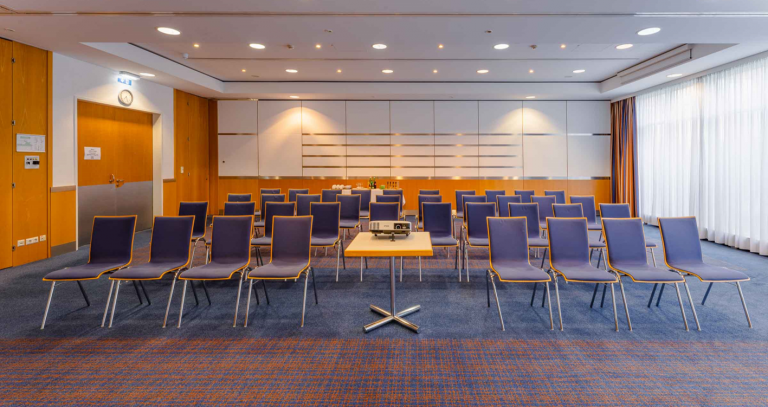
When it comes to numbers, realistic planning helps more than a figure set too high just to be safe. A room for 30 people may work in classroom seating but already feel too small in a U-shape. So always state the seating you want or describe how people will work: plenary presentations, group work, active team building or a seated dinner. If numbers are still open, give a range, say 35 to 45 people, and ask about the capacities for each.
The occasion belongs in the enquiry too. Hearing the word "workshop", a seminar hotel in Austria or a conference hotel in Germany can immediately judge better whether you need several working rooms, breakout spaces or an open break area. For a company party, on the other hand, music, closing time, cloakroom, stage and deliveries are often more relevant than a classic projector.
Also decide how fixed your date is. If there is only one possible date, the enquiry should go out quickly. For a multi-day event or a group travelling long distances, an alternative date can open up considerably more choice and better terms.
The details that prevent follow-up questions
A good enquiry answers the questions a venue team needs answered to prepare a specific quote. It doesn't have to be long, but it does have to be complete. These four points should always be included:
- Date, time and, where relevant, set-up and dismantling times
- Number of participants, including any likely variation
- Occasion, preferred room layout and rooms required
- Catering, technical equipment and special requirements
For catering, simply mentioning "catering" isn't always enough. It's better to state whether you are planning a morning and afternoon coffee break, lunch, finger food in the evening or a seated menu. Depending on how far your planning has got, you can already mention allergies and vegan options or flag them as expected requirements.
Technical needs are often underestimated. For a short team meeting, a screen, stable Wi-Fi and power sockets at the table are enough. For a hybrid workshop you may need a camera, microphones, speakers, technical support and quiet acoustics. If external suppliers are delivering or a band is playing, access, loading zone and permitted set-up times belong in the enquiry too.
Raise any special conditions openly. These include accessibility, overnight stays, arrival by public transport, parking, a separate reception or the option of putting up your own branding. Sorting out such points after signing the contract is possible, but rarely pleasant.
| Detail | Why it matters | Useful wording |
|---|---|---|
| Time window | Room and staff planning often depends on set-up and finish time | Event 9:00 am to 5:00 pm, set-up possible from 8:00 am |
| Seating | The same space holds different numbers of people depending on the set-up | 28 people in a U-shape, plus two group work areas |
| Catering | Breaks, service style and room changes affect the price | Two coffee breaks, lunch, water in the room |
| Budget | The venue can offer suitable options instead of an unusable standard package | Total budget up to €3,500 gross, excluding accommodation |
Precision pays off with the budget. State whether your upper limit is net or gross and whether it covers the whole event or only the room hire. A budget is not a disadvantage in negotiations. On the contrary, it prevents quotes that are outside your range from the start. If you don't want to name a figure yet, at least ask for a separate breakdown of room hire, catering, equipment, service and extra costs.
How to keep your enquiry short and specific
A professional enquiry needs neither formal language nor long explanations. What matters is that the venue can check straight away whether the date, rooms and capacity fit. This template can be adapted for seminars, conferences and corporate events:
On 18 September we are planning a full-day strategy workshop for around 24 people. We need a main room in a U-shape from 9:00 am to 5:00 pm and two smaller areas for group work in the afternoon. We are planning two coffee breaks, a shared lunch and water in the room. Please let us know your availability, a transparent cost breakdown and the standard equipment included. Our budget for room, catering and equipment is a maximum of €2,800 gross.
If you are contacting several venues, keep the core of the enquiry the same. Only then will you be comparing similar services later on. Individual details make sense if they genuinely fit the venue, such as a roof terrace for the reception or an attached hotel for a multi-day retreat.
Direct enquiries save coordination steps. On JustRoom you can enter key details such as occasion, date and number of guests in a structured way and send your enquiry directly to the venue provider – 100% commission-free. Still, the more precise your details, the more useful the quote will be.
Don't compare quotes on the final price alone
The lowest total is not automatically the most economical choice. A low room rate may mean that equipment, cleaning, service staff, water or use up to the agreed end of the event are charged extra. So don't just compare the figure at the bottom of the quote, but the items it includes.
Check the room first: which space, which seating and what period of use are actually included? Then look at catering and equipment. With day delegate packages, it should be clear how many breaks, drinks and meals are included. With equipment, the details are decisive: a projector on its own is not the same as a hybrid set-up with technical support.
Also watch out for minimum spends and attendance guarantees. Some venues calculate on the basis of a guaranteed minimum number, others charge for the actual number of participants up to a certain cut-off date. For groups whose size may still change, this rule can matter more than a small price difference in the package.
The following questions resolve many uncertainties before you confirm: Are all prices net or gross? Is room hire charged on top of the package? When does the final number of guests need to be confirmed? What cancellation terms apply? Are there costs for extensions, earlier set-up or later dismantling? And is the requested combination of rooms reserved until a specific date or only provisionally held?
If two quotes are equally good, practical factors may tip the balance. A venue five minutes from the station can be worth more for a one-day event than a slightly cheaper place that is hard to get to. For an offsite, on the other hand, a quiet location with accommodation and outdoor space may be decisive. It all depends on what really counts for your format.
Follow up, decide and confirm properly
If you don't hear back within two working days, a short follow-up makes sense. Keep it specific: ask for a yes or no on availability, or ask whether any information is missing. At the same time, don't rely on a single venue, especially for popular dates in spring, before Christmas or during major trade fairs and congresses.
Before giving binding confirmation, check the final quote against your original enquiry once more. Are the date, times, room name, number of guests, catering and pricing logic correct? Have any changes confirmed in writing, even if they were quickly agreed over the phone. This protects both sides if contact persons change or details are later remembered differently.
A good venue enquiry is not a formal box-ticking exercise. It is the first working basis for an event that can be planned without unnecessary loops. If you describe clearly what is going to happen, you will get suitable answers faster – and can put your energy into programme, guests and content instead of avoidable follow-up questions.