A workshop with 18 people, three working days and two overnight stays rarely fails because of the projector. The critical points are usually the transitions: too few quiet spaces, long walks between bedrooms and the seminar room, unclear mealtimes or a quote in which important costs only appear at the very end. A seminar hotel for a multi-day event therefore has to do more than provide a large room and available bedrooms. It needs to bring focused work, informal exchange and rest together in a meaningful way.
If you choose solely on the day delegate rate and room price, you often overlook the factors that determine real success. With a clear list of requirements, you can compare quotes faster and avoid back-and-forth questions.
What a seminar hotel for multi-day events needs to deliver
When an event runs over several days, the demands on the venue change. On the first morning, the AV equipment and a well-prepared main room are what count. From day two, the room climate, sleep quality, food and the chance to have a moment to yourself become much more important. If participants are expected to keep working or exchanging ideas in the evening, you also need spaces suited to that – not just a hotel bar with background music.
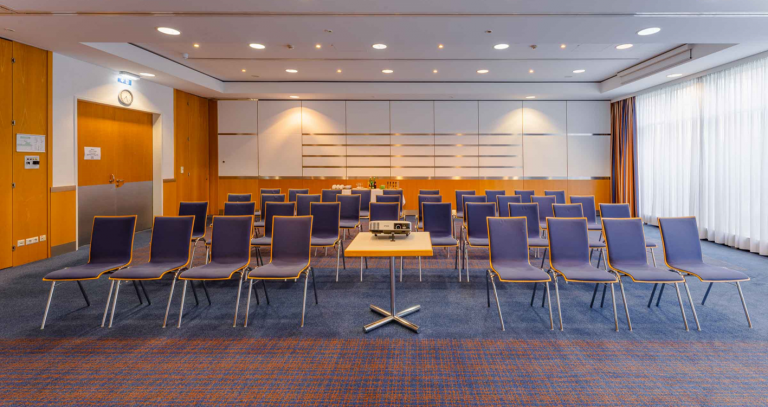
First check that capacity works on both levels: the seminar room must be suitable for your preferred seating, and the hotel needs enough bedrooms for the group at the same time. A U-shape for 20 people requires considerably more space than theatre seating with 20 seats. For interactive formats, don't plan around the maximum possible number of people. Space to move, facilitation materials and sightlines all take up room, but they improve the quality of the work.
Location is also a budget question. A hotel near a railway station or airport reduces transfer costs and makes it easier for people to travel in from several cities. A remote seminar hotel, on the other hand, can make sense if the desired effect is distance from day-to-day work. In that case, factor in group transfers, parking and arrival times as firm commitments. For a leadership retreat, peace and quiet can matter more than a city-centre location. For a two-day sales training course with participants from Vienna, Graz and Linz, easy travel is often the stronger argument.
| Criterion | Why it matters over several days | Specific question for the hotel |
|---|---|---|
| Seminar and breakout rooms | Formats change, teams work in parallel | Are the breakout rooms available exclusively for the entire seminar? |
| Room allocation | Late bookings and different room preferences are common | Until when can I release or add rooms free of charge? |
| Catering | Energy levels and the schedule depend on it | Can coffee breaks, lunch and dinner be timed flexibly? |
| AV equipment | Breakdowns immediately disrupt multi-day programmes | Is there a technical contact on site, and what does additional equipment cost? |
| Lounge areas | Exchange often happens outside the seminar room | Is there a quiet area for conversations in the evening? |
Plan the room concept and daily schedule together
A single plenary room isn't enough for many multi-day formats. In strategy workshops, training courses or team-building events in particular, input, group work, individual reflection and presentations alternate. Two smaller breakout rooms can be more valuable than an oversized main hall. This is especially true when teams are working on confidential topics at the same time.
Don't just tell the hotel the number of participants – describe the schedule. State the seating you have in mind, the start and end of each day, the number of parallel groups and any special programme items. A group dinner, an outdoor session or a closing presentation in a different room all affect staff planning, menu choice and room reservations. The more specific your enquiry, the more comparable the quotes will be.
Pay attention to distances within the building. If the seminar room, breakout rooms, restaurant and bedrooms are far apart, minutes are lost with every change. That sounds minor, but over three days it quickly adds up to noticeable idle time. Short distances also help when participants want to make a call, fetch documents or get some fresh air during a break.
The room climate deserves the same attention as the AV equipment. Daylight is usually more pleasant for longer working sessions but may require blackout for presentations. Ask about ventilation or air conditioning, the hours the rooms are available and whether they can be used in the evening. Some hotels charge extra for a seminar room after a certain time. That isn't a deal-breaker, but it should be in the budget before you confirm.
Assess bedrooms, food and the evening programme realistically
The overnight stay turns a conference into a shared experience. That's why bedrooms are not just a line on the invoice. Single rooms offer privacy and avoid discussions about who shares with whom. Double rooms can make sense on smaller budgets, but they don't suit every group and should always be optional. Also check whether all the rooms are in the same building and whether certain categories are only available in limited numbers.
International teams raise further questions: are there accessible rooms, early breakfast for those arriving, reliable Wi-Fi in the bedrooms too, and English-speaking staff? For a group with a very early start, breakfast from 6:30 am can be more important than an extensive buffet from 7:30 am.
Catering should support the schedule rather than slow it down. A fixed three-course lunch looks attractive on paper but can take too long in a packed programme. A light buffet or a served business lunch saves time and keeps energy levels steadier. Let the hotel know early about vegetarian, vegan, allergy-related or religious requirements. With 25 people, even a small number of special requests can create extra work at short notice.
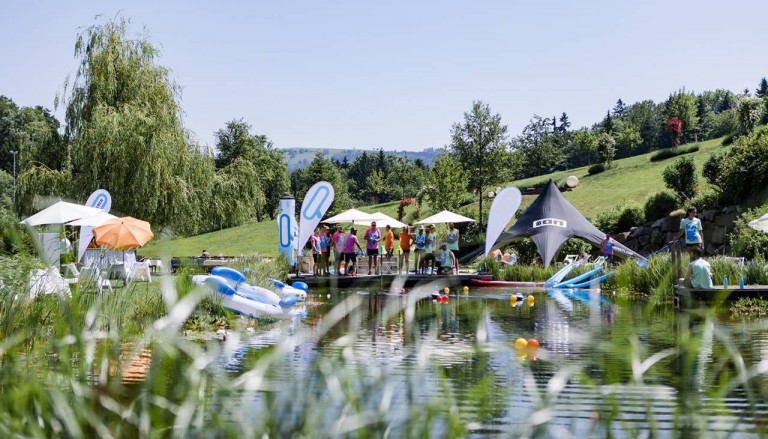
The evening programme doesn't have to be elaborate. A reserved area for a group dinner, a walk or a short activity on the hotel grounds can be enough. What matters is that the programme item suits the group. After an intense conflict workshop, a quiet evening may make more sense than a competitive team event. At a sales conference, on the other hand, things can be livelier. Check closing times, noise rules and whether the area is exclusive in advance if conversations are not meant to take place in public.
Compare quotes properly and protect yourself against costs
Never compare the total amount alone. A low day rate may have been calculated without breakout rooms, AV equipment, parking, local tourist tax or dinner. Ask for a breakdown per person per day, with separate figures for room hire, bedrooms, catering and additional services. This shows you which items are fixed and where you can save.
Cancellation and release deadlines are particularly important. For multi-day events, participant numbers often change, for example due to illness or short-notice project meetings. Good terms allow you to reduce part of your room allocation free of charge up to a clearly defined date. Also ask what applies if you postpone rather than cancel. For internal training courses, this can be far more valuable than a marginally cheaper room rate.
| Cost item | Often included | Often charged extra |
|---|---|---|
| Day delegate package | Standard AV, coffee break, lunch | Facilitation kit, specialist equipment, extended room hire |
| Overnight stay | Room and breakfast | Local tourist tax, parking, early check-in |
| Evening event | Set menu with package deals | Room hire, drinks, bespoke decoration |
| Supporting programme | Rarely | Trainers, transfers, external activities |
Before making your final choice, set three priorities. These might be a short journey, a specific budget and two breakout rooms. A hotel that meets two of these very well is often a better choice than a quote packed with extras that will hardly be used during the event. If the event is confidential in nature, exclusive use of the rooms should take precedence over a small price advantage.
Find the right venue faster with a precise enquiry
A good enquiry includes the date, number of people, overnight stays, preferred room types, planned meeting-room hours and the AV equipment required. Add two or three sentences about the format: for example "interactive workshop with four working groups" or "conference with presentations and dinner". This allows the hotel to judge straight away which rooms really fit and whether alternatives within the hotel would make sense.
For popular dates, plan with several options. Spring and autumn are often especially busy for seminar hotels, as are weekdays from Tuesday to Thursday. If you stay flexible on dates or consider arriving on a Sunday, you are more likely to find suitable room allocations and better terms. To keep quotes comparable, send every venue provider the same key details.
On JustRoom, you can filter suitable seminar hotels by capacity, facilities and region and send your enquiry directly to the venue provider – 100% commission-free. But your preparation remains the deciding factor: when the room schedule, bedroom requirements and budget are clear, a hotel stay becomes a setting in which your team can genuinely work together over several days.