The usual hotel bar does its job. But it rarely ensures that colleagues are still talking about the evening weeks later. Unique event venues for company parties make exactly this difference: they give the occasion a setting that matches your company's culture – and turn an obligatory date into a shared experience.
What matters is not that a venue looks as extravagant as possible. An old factory hall, a rooftop or a winery can be an excellent fit. But if travel, schedule, food and acoustics haven't been thought through, even the most spectacular space quickly becomes hard work. Choose wisely and you combine atmosphere with planning that works for guests and the organising team alike.
What really makes a company party special
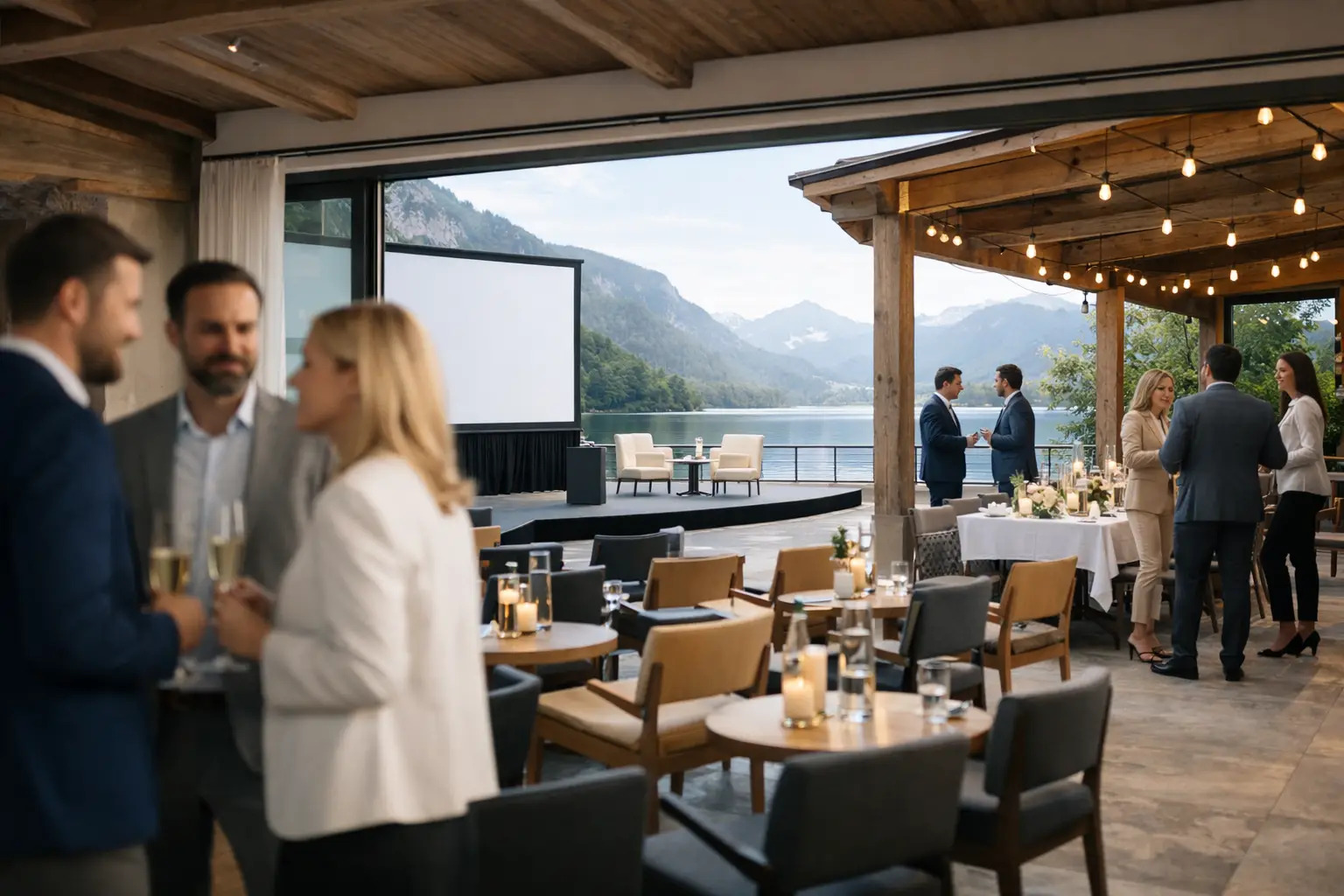
A special venue tells a story before the first glass is poured. That might be a historic ballroom, a modern loft space with views over the city or a seminar hotel set in peaceful countryside. The space doesn't have to stand on its own. Its effect comes from the interplay with the occasion: a summer party thrives on a terrace, garden and an uncomplicated indoor plan B. A Christmas party needs warmth, good lounge areas and a stage for short programme items.
So don't just ask: "What does the venue look like?" A better question is: "How should our guests move around and meet each other this evening?" For 40 people, a small room with one long table can feel more connected than a large hall. For 180 guests, on the other hand, several zones make sense: reception, dinner, bar and dance floor. This creates conversations in smaller groups without the evening falling apart.
Company culture matters too. A creative team often feels more at home in a studio or industrial space than in a classic banquet hall. For a celebration with clients or senior managers, a high-end restaurant, a museum or a stylish conference hotel may be the more fitting choice. Special doesn't necessarily mean loud or unusual. Special can also mean that the venue suits your guests remarkably well.
Choosing unique event venues for company parties
The first filter is the real number of guests. Don't plan with the number on the invitation, but with a reliable forecast of acceptances. For internal parties, a 70 to 85 per cent attendance rate is often realistic; for mandatory formats it may be higher. Always ask the venue for a seating plan for your specific schedule. The maximum capacity for a standing reception says little about whether 120 people can also eat, present and dance there comfortably.
The second filter is the format. A party with a seated dinner, awards ceremony and DJ has different requirements from a relaxed get-together with food stations. If you are planning a programme, check sightlines, stage area, sound system and blackout options. A beautiful brick wall is no substitute for a speech people can actually hear. With loud music, it also becomes relevant whether there are decibel limits, closing times or a separate smoking area.
| Criterion to check | Why it matters | What exactly to ask |
|---|---|---|
| Room layout | Avoids crowding and empty spaces | Are there separate areas for reception, dining, programme and party? |
| Accessibility | Influences acceptances and cancellations | What are the arrangements for public transport, parking, taxi rank and step-free access? |
| Food and drink | Shapes the memory more than decoration does | Is there a set menu, buffet or food stations, plus vegan and low-allergen options? |
| Technology | Ensures a professional running order | Are microphones, lighting, a projector, DJ equipment and on-site support available? |
| Budget | Prevents unpleasant surprises later | What flat rates, minimum spends, service and cleaning charges apply? |
A common mistake is to compare only the room hire price. A cheaper event venue can end up costing more if furniture, technology, staff, cloakroom or final cleaning are charged extra. So ask for a complete quote including all fixed costs and any surcharges after a certain time. For evening events, minimum spends are also important: they can make sense if you are planning generous catering anyway, but they limit your room for manoeuvre with smaller groups.
Three formats that break away from the standard
Rooftop, terrace or courtyard for summer parties
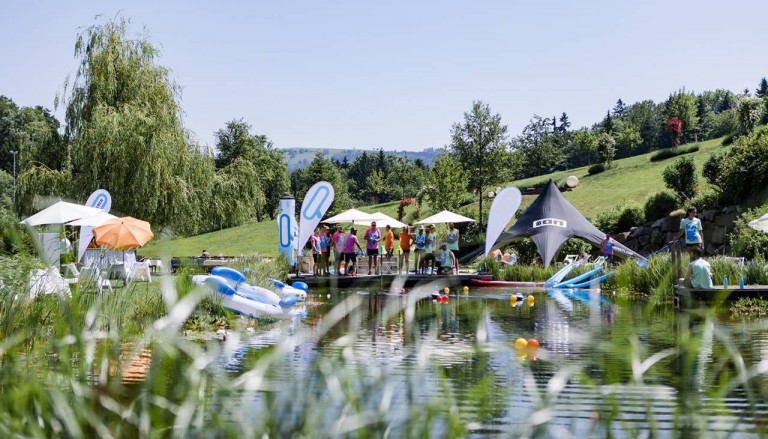
An outdoor area lifts the mood instantly. Guests can arrive, move around freely and the evening feels less formal. This works particularly well for teams who are still working during the day and want to celebrate afterwards without a major change of clothes. The catch: weather, wind and temperature have a say. A reliable plan B is not a detail but part of the concept. Check whether the indoor area can hold all guests at once and until what time music or conversation is allowed outside.
Industrial charm for workshops with an evening programme
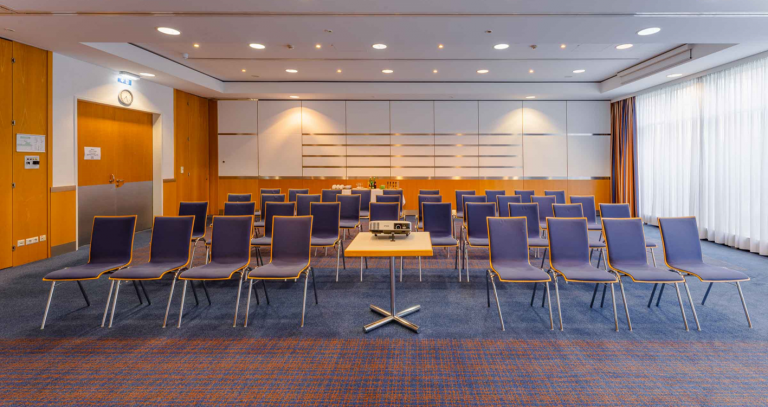
A former factory, a loft or a workshop venue brings character without needing much decoration. This setting is ideal when a workshop, kick-off event or strategy day flows straight into the party. During the day you need conditions for focused work: daylight, good acoustics, enough power sockets and separate breakout areas. In the evening, the same place can become more relaxed. The advantage is the short transition; the challenge is the logistics between the work set-up and the dinner set-up.
Culinary venues for smaller teams and client events
A winery, a brewery, a cookery school or a restaurant with its own function room makes food and drink part of the programme. For groups of 15 to 60 people, this can feel more personal than a large event hall. Cooking together or a tasting gets conversations going almost by itself. But make sure the experience doesn't dominate the whole evening. Some guests want to take part, others would rather arrive, chat and eat. Good concepts offer both without pressure.
Think about schedule and budget together from the start
A venue becomes a good decision when the rough schedule is in place before you send your enquiry. Decide when guests arrive, whether there will be a welcome, presentation or awards, when food is served and how long the official part lasts. With this framework, you can quickly see whether moving between rooms is realistic or whether a single space would be the better solution.
Don't calculate the budget purely per head. Split it into four blocks: venue and infrastructure, food and drink, programme and technology, and transport or accommodation. Especially for parties outside Vienna, Salzburg, Graz or Linz, a shuttle can make more sense than lots of individual taxis. If the party takes place in Austria with a multi-day team programme, a seminar hotel is often practical. In Germany, people usually search for a conference hotel for the same need. In both cases, combining accommodation, workspaces and evening venue saves travel and coordination.
The best time to enquire is before the classic peak periods. Christmas parties often need six to nine months' lead time, and popular dates in November and December even more. Summer parties benefit if you plan before the outdoor season begins. For short-notice dates, flexibility pays off: a Thursday instead of a Friday or a date in January can open up venues that would otherwise be fully booked.
How to compare quotes without relying on gut feeling
Ask two to four suitable properties for quotes, not ten. Too many options lengthen the coordination and make differences harder to see. Give each enquiry the same key details: date or time window, number of guests, desired schedule, catering preferences, technical requirements and budget range. Only then can quotes be compared fairly.
Then assess not only the final price, but also the quality of the response. Is there a specific follow-up question? Is it clear what is included? Does the venue suggest a sensible alternative if your preferred date isn't available? These details show how reliable the collaboration is likely to be on the day of the event.
If you would like to compare suitable spaces by capacity, occasion and facilities, you can send enquiries directly to venue providers via JustRoom, commission-free. For the final choice, still take time for a site visit or at least a precise floor plan. The right venue isn't the most eye-catching one in your feed, but the one where your team comes together without friction and the occasion has exactly the effect you planned.